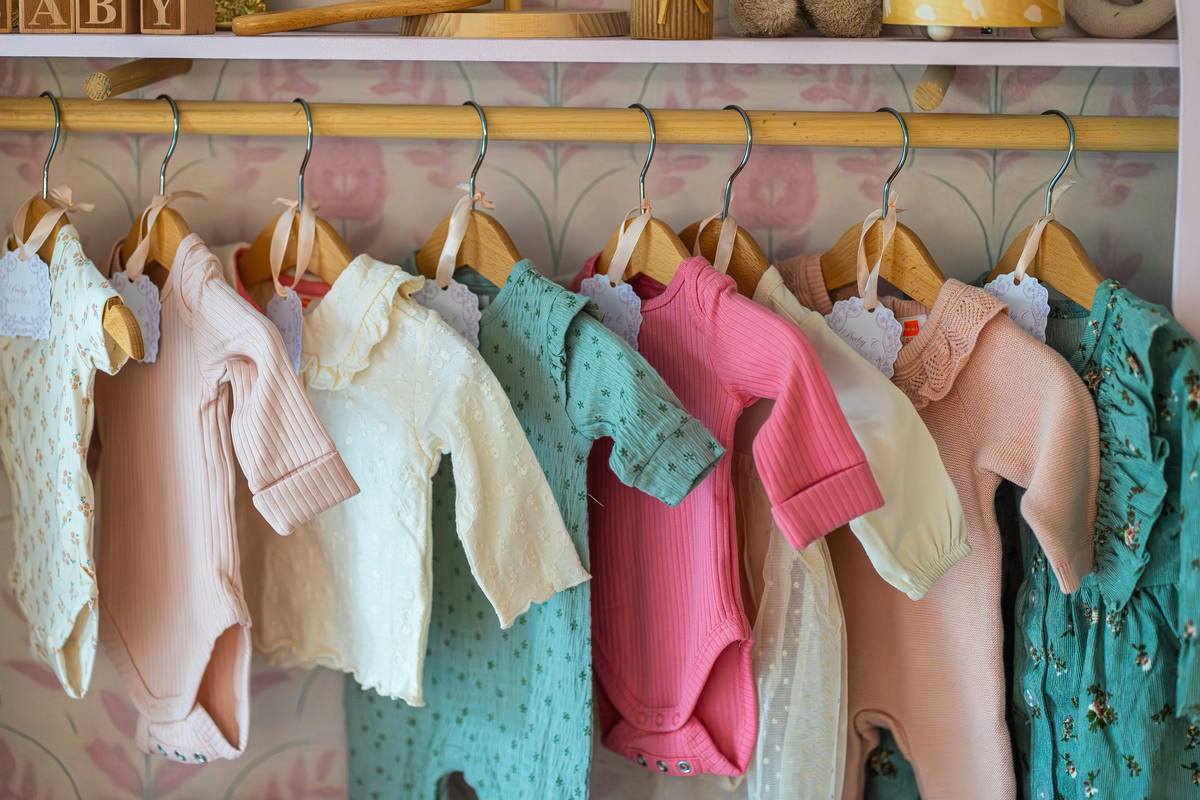
Did you know that a single conventional cotton onesie can use up to 2,700 liters of water—enough to meet one person’s drinking needs for 2.5 years?* And that’s before you factor in pesticides, synthetic dyes, and plastic-based packaging.
If you’re a new or expecting parent trying to raise your little one with kindness—to both people and planet—you’re not just shopping for cute outfits. You’re making a quiet revolution with every purchase. But let’s be real: navigating “sustainable baby products” feels like decoding hieroglyphics while sleep-deprived at 3 a.m.
This post cuts through the greenwashing noise. Drawing from my decade in sustainable textile advocacy (and as a mom who once washed a non-certified “eco” onesie only to find it shed microplastics in the rinse cycle—RIP my trust), I’ll show you exactly why organic cotton baby onesies are a foundational sustainable baby product, how to spot truly ethical brands, and what certifications actually matter. You’ll walk away knowing how to protect your baby’s skin, your values, and the Earth—with zero guilt-tripping.
Table of Contents
- The Real Cost of Baby Clothes (It’s Not Just the Price Tag)
- How to Choose Truly Sustainable Onesies: A Step-by-Step Guide
- Best Practices for Longevity & Minimal Impact
- Real Family Case Study: From Greenwash to Genuine Change
- Sustainable Baby Products FAQ
Key Takeaways
- Conventional cotton uses 16% of the world’s insecticides—despite covering just 2.4% of cropland (FAO).
- GOTS (Global Organic Textile Standard) certification is the gold standard—it covers farming, processing, labor, and chemical use.
- Organic cotton reduces water consumption by 91% compared to conventional cotton (Textile Exchange, 2021).
- Look beyond fabric: check stitching, dye safety, packaging, and brand transparency.
- Sustainability includes reuse—hand-me-downs and resale extend impact far beyond the first wear.
The Real Cost of Baby Clothes (It’s Not Just the Price Tag)
Babies grow fast—like, “outgrow a onesie before you finish folding laundry” fast. The average infant goes through 8–10 outfits per week. Multiply that by synthetic fibers, toxic dyes, and throwaway culture, and you’ve got a sustainability crisis stitched into tiny seams.
Conventional cotton farming relies heavily on synthetic fertilizers and pesticides—many classified as probable human carcinogens by the EPA. These chemicals don’t just harm farmworkers; they leach into soil and waterways, affecting ecosystems for decades. Plus, most “cute” baby clothes contain polyester (aka plastic), which sheds microfibers with every wash—ending up in oceans and food chains.
But here’s the kicker: your baby’s skin is 30% thinner than yours—and more permeable. Synthetic dyes and chemical residues (like formaldehyde used to prevent wrinkling) can trigger rashes, eczema, or sensitivities. So when we talk about “sustainable baby products,” it’s not just about the planet—it’s about protecting your child’s health from day one.
Grumpy You: “Great. Another thing to stress about while surviving diaper blowouts.”
Optimist You: “What if choosing one better onesie sets off a ripple effect—for your family, community, and climate?”
How to Choose Truly Sustainable Onesies: A Step-by-Step Guide
What certifications should I look for?
Ditch vague terms like “natural” or “eco-friendly.” Instead, prioritize third-party certifications:
- GOTS (Global Organic Textile Standard): Covers everything from seed to stitch—organic fiber content (min. 95%), banned toxic dyes, fair labor, wastewater treatment. This is non-negotiable.
- OCS (Organic Content Standard): Verifies organic fiber percentage but doesn’t regulate processing chemicals or labor—less comprehensive than GOTS.
- OEKO-TEX Standard 100: Ensures no harmful substances in final product—but doesn’t address farming or environmental impact.
Bottom line: GOTS = full-circle sustainability.
Is “organic cotton” enough?
Nope. I learned this the hard way when I bought a batch labeled “100% organic cotton”—only to discover it was dyed with azo dyes (known carcinogens) and sewn in a factory with no wage transparency. Always check:
- Dye safety (GOTS bans heavy metals and chlorine bleaching)
- Stitching durability (double-stitched seams last through multiple kids)
- Packaging (recycled paper > plastic polybags)
- Brand transparency (Do they publish supply chain maps? Factory names?)
Pro tip: Brands like Burt’s Bees Baby, Mon Organic, and Colored Organics publish full GOTS certificates and factory info online.
Should I care about color and design?
Yes. Lighter colors generally use fewer dyes and less water. Avoid prints unless they’re water-based or digital (screen printing often uses PVC). And skip plastic snaps—opt for nickel-free metal or coconut-shell buttons.
Best Practices for Longevity & Minimal Impact
- Wash cold, air dry: Hot water degrades fibers faster and increases energy use. Skip the dryer—it shrinks organic cotton prematurely.
- Use plant-based detergent: Conventional detergents contain optical brighteners and phosphates that pollute waterways.
- Size up strategically: Buy 0–3 months in smaller sizes, but go 3–6+ for longer wear. Babies grow in length before width!
- Join a onesie swap group: Platforms like Facebook or local parenting co-ops keep garments in circulation.
- Repair, don’t discard: A tiny hole? Patch it with organic cotton fabric scraps. Teach older siblings mending—it’s sustainability in action.
Terrible Tip Alert: “Just buy bamboo!” Nope. Most “bamboo” baby clothes are actually rayon—chemically processed with toxic solvents like carbon disulfide. Unless it’s mechanically processed (rare and expensive), it’s greenwashing. Stick with GOTS-certified organic cotton—it’s proven, scalable, and safer.
Real Family Case Study: From Greenwash to Genuine Change
Last year, Maya R. (a pediatric nurse and mom of twins in Portland) switched her entire baby wardrobe to GOTS-certified organic cotton after her son developed unexplained rashes. She tracked costs, durability, and environmental impact over 6 months.
Result? Her organic onesies lasted 2.5x longer than previous brands—even after being handed down to a second child. She calculated that by avoiding just 12 conventional onesies, she prevented ~32,400 liters of water waste and eliminated exposure to 1.2 kg of synthetic pesticides.
“I thought sustainable meant expensive,” she told me. “But I spent $180 total on 10 high-quality onesies. My old ‘cheap’ brand cost $15 each but fell apart in 3 weeks—so I was rebuying constantly. This saved money and sanity.”
Sustainable Baby Products FAQ
Are organic cotton onesies really worth the higher price?
Yes—if priced fairly. Ethical production costs more, but longevity offsets it. A $22 GOTS onesie worn for 6 months = $0.12/day. A $12 conventional one worn for 3 weeks = $0.57/day. Plus, you’re investing in cleaner water and safer jobs.
Can I trust “organic” claims without GOTS?
No. The USDA certifies fiber farming as organic, but not textile processing. Without GOTS, your onesie could be organically grown cotton treated with toxic dyes or sewn in unsafe factories.
What if I can’t afford certified onesies right now?
Start small: buy one GOTS-certified piece as a “gateway garment.” Prioritize basics like sleepers or undershirts. Or shop secondhand—pre-loved organic cotton still avoids new resource extraction.
Do sustainable baby products actually make a difference?
Absolutely. If every U.S. family chose just one GOTS-certified onesie over conventional, we’d save ~10 billion liters of water annually—enough to fill 4,000 Olympic pools (Organic Trade Association).
Conclusion
Sustainable baby products aren’t about perfection—they’re about purposeful choices. Starting with something as simple as an organic cotton onesie creates a foundation: safer for your baby, kinder to farmers, gentler on the planet.
You don’t need to overhaul your entire nursery overnight. But by demanding transparency, choosing GOTS-certified options, and embracing reuse, you turn everyday parenting into powerful stewardship.
So next time you’re folding yet another onesie at midnight, remember: that tiny garment carries the weight of a better future. And honestly? That’s kinda beautiful.
Like a Tamagotchi, your baby’s wardrobe needs daily care—but the payoff is a world that thrives long after bedtime.
Haiku:
Soft cotton, clean seams,
No poisons in baby’s sleep—
Earth breathes easier.